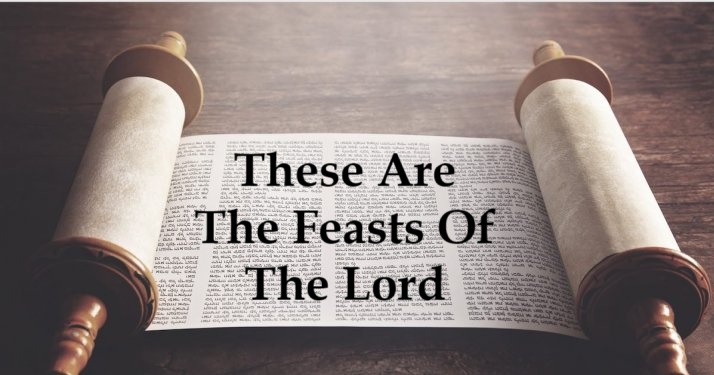
Should Christians Celebrate The Jewish Feasts And Holy Days?
Many Christians today are curious about the Biblical Jewish feasts and wonder whether these festivals still apply to believers under the New Covenant. The Old Testament feasts were rich with meaning and pointed forward to the work of Jesus Christ. This study takes a clear, Scripture‑based look at the purpose of the feasts, how they relate to Jesus, and whether Christians are called to observe them today.
Last updated: February 2026
An Introduction to God's Spring and Fall Feasts
Does God Want Christians to Celebrate His Festivals and Holy Days?
What major religious holidays should Christians observe? Most believers assume the answer is Christmas and Easter — but Scripture never commands these celebrations. In fact, the Bible is completely silent about Christians observing Jesus’ birth or resurrection as annual holidays.
There is no command in any version of the Bible to celebrate Christmas. There is also no instruction to observe Easter as a Christian festival. The only time the word “Easter” appears in the King James Version (Acts 12:4), it is a mistranslation of the Greek word pascha, which always means Passover.
So if Christmas and Easter are not commanded, what holy days does God actually tell His people to observe? The answer is found in Leviticus 23 — God’s own list of His Festivals and Holy Days.
These are not “Jewish holidays.” God calls them My Feasts — divine appointments given to all humanity, not just Israel.
Leviticus 23:2–4 — “The feasts of the LORD… these are My feasts.”
These Festivals reveal God’s plan of salvation. Each Holy Day is a prophetic picture (a “type”) pointing to a New Testament fulfillment (an “antitype”). Together, they outline God’s entire redemptive plan through Jesus Christ.
Contrary to popular belief, the New Testament shows Christians — including Gentiles — observing these Festivals. Matthew, Mark, Luke, John, Acts, 1 Corinthians, Colossians, 2 Peter, and Jude all reference them.
What Are the Feasts and Holy Days in Leviticus 23?
Here are the seven annual Festivals God commands:
The Passover (v. 5)
The Days of Unleavened Bread (vv. 6–8)
The Feast of Weeks / Pentecost (vv. 15–22)
The Feast of Trumpets (vv. 23–25)
The Day of Atonement (vv. 26–32)
The Feast of Tabernacles (vv. 33–39)
The Last Great Day (v. 39)
What About Colossians 2?
Does It Say the Holy Days Were “Done Away”?
Some Christians argue that Colossians 2 proves the Holy Days are no longer required. But the passage actually shows the opposite — that Gentile Christians were keeping them.
Colossians 2:16 — “Let no man therefore judge you… in respect of a holy day.”
Paul does not say, “Do not keep the Holy Days.” Instead, he tells believers not to let outsiders judge them for keeping God’s Festivals. Their Gentile neighbors criticized them for observing what they viewed as “Jewish” customs — but Paul encouraged them to continue.
God’s Festivals were never intended only for Israel. They were given for all people, for all time — and Scripture shows that Christians will celebrate them with Jesus in the Kingdom of God.
The Spring and Fall Festivals
The Bible Studies on this topic are divided into two parts:
The Spring Festivals:
Passover, Unleavened Bread, and Pentecost
Should Christians Keep Jewish Spring Feasts and Holy Days?
The Fall Festivals:
Trumpets, Atonement, Tabernacles, and the Last Great Day
Should Christians Keep Jewish Fall Feasts and Holy Days?
These studies will help you understand how God’s Festivals reveal His plan for humanity — and why they matter for Christians today.
For more information about Jesus, false church teachings, or additional Bible studies about what the Bible really says, visit this link to go to the Main Menu page.
Related Bible Studies
Frequently Asked Questions
Are Christians commanded to celebrate the Jewish feasts?
No. Scripture does not command Christians under the New Covenant to observe the Old Testament feasts. These festivals pointed forward to Christ, who fulfilled them.
Did Jesus and the apostles keep the Jewish feasts?
Yes. Jesus and the apostles observed the feasts because they lived under the Old Covenant. After Christ’s death and resurrection, believers are no longer under the law of Moses.
Do the Jewish feasts point to Jesus?
Yes. Each feast foreshadows a specific aspect of Christ’s work—His sacrifice, resurrection, the giving of the Spirit, and His future return.
Is it wrong for Christians to celebrate the Jewish feasts?
Christians may study or commemorate the feasts as a way to understand Scripture, but they should not treat them as required for salvation or spiritual standing.
What does the New Testament teach about observing Old Testament festivals?
The New Testament teaches that believers are not judged by whether they keep festivals, new moons, or Sabbaths, because these were shadows pointing to Christ (Colossians 2:16–17).
About This Ministry & Site Policies
About the Authors
Studies are prepared by the Gateway to Jesus Ministry Team, a group of seminary trained ministers with more than 20 years of experience in biblical teaching and evangelism.
About the Ministry
Gateway to Jesus Ministries is dedicated to clear, Scripture based teaching written in simple, accessible language for readers of all backgrounds.
Copyright & Permissions
Our studies are free to use and share with a working link back to our homepage.
Copyright & Permissions Policy
Privacy & Terms
We do not sell data or track visitors for advertising. Use of this site requires respectful sharing and proper attribution.
© 2024 Gateway to Jesus Ministries. All Rights Reserved.